01 / Biography
Engineer. Builder. Founder. Ecosystem builder. Infrastructure builder.
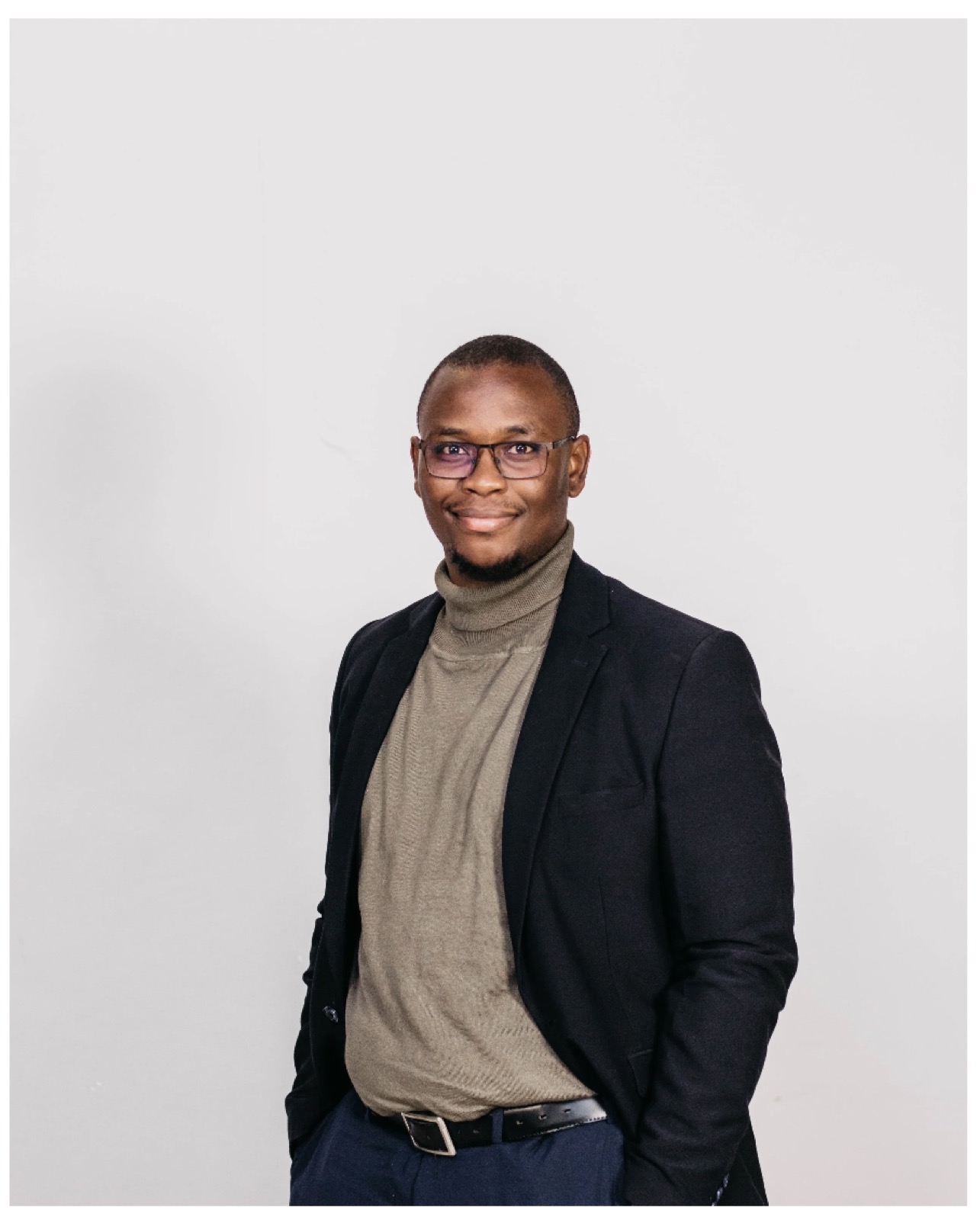
A career biography
The Engineer
Moagi Onkabetse's foundation is in engineering. He studied Computer Systems Engineering at the University of Sunderland, a degree that shaped more than his technical skill set. It shaped how he diagnoses problems: trace an issue back to its source, identify the constraint, and fix the system rather than the symptom.
That discipline carried through early roles in software, IT, business applications and technology operations, before it was tested against something engineering alone does not teach: building a company. The transition from writing software to running a business is where his story as an entrepreneur begins, and it is also where the first lesson of his career took shape. Technology can make something possible. It does not automatically create distribution, customers, trust, operations, or a sustainable commercial model around it. Technical capability only becomes valuable once it is connected to a real business problem.
Caesar Capital
Caesar Capital was Moagi's first company, and it grew directly out of his engineering background. The underlying idea was to use technology and infrastructure as the foundation for new business models, rather than treating them as a cost centre sitting behind the product.
During COVID-19, the business explored building cloud infrastructure and offering it to organisations as a service. That work surfaced a pattern Moagi would keep encountering in every company he built afterward: the technology itself is rarely the hardest part. Getting the infrastructure, the regulation, the adoption curve and the commercial model to work together at scale is. Caesar Capital was where that lesson was first learned, in practice rather than in theory.
Aurora Media Group
Aurora Media Group grew out of that early infrastructure work, evolving into a media technology company built to give African creators, athletes and organisations new ways to distribute and monetise content. Moagi served as CEO, leading Aurora from an infrastructure experiment into a digital media platform with a specific thesis: content owners should hold a direct economic stake in the platforms they build audiences on.
The company explored content distribution, streaming technology and creator monetisation across African markets. It also reinforced the same lesson that Caesar Capital had introduced, from a different angle. Distribution, regulation, customer behaviour, capital, partnerships and timing can matter as much as the product itself. Building good technology for creators was necessary. It was not sufficient on its own.
In May 2024, Moagi took Aurora Media Group onto the pitch stage at the Forbes Under 30 Summit Africa and won the pitch competition, in front of an international audience of founders and investors. It was a visible marker of a company that had moved from infrastructure experiment to a platform with real commercial traction, and it opened the door to the next chapter of the story.
Techstars
Aurora's place in Techstars Founder Catalyst '23 was a turning point, not because of the badge it added to the company's history, but because of what it exposed Moagi to directly: an international community of founders, investors and operators working on problems similar to his own, at a scale he had not previously had regular access to.
It confirmed something he already believed, that companies built in African markets can matter well beyond them. It also changed how he thought about his own role going forward. The same access to networks, mentorship and capital that had helped Aurora move faster could help other founders too, if someone built the path for it rather than waiting for it to appear. That idea became the starting point for the next phase of his work.
Building the Ecosystem I Once Needed
Since 2024, Moagi has worked with ecosystem partners to bring Techstars Startup Weekend and Techstars Founder Catalyst programming to the SADC region, giving emerging founders access to mentorship, networks and capital that were not previously available locally in the same form.
The underlying belief behind this work is straightforward. Ambition is rarely the limiting factor for a founder in an emerging market. Support around the founder is. Mentorship, networks, capital, experienced operators, market access and international connections determine whether an idea becomes a company as much as the idea itself does. Having experienced what access changed in his own trajectory through Techstars, Moagi became interested in building that same access for the founders who came after him.
Building From Botswana
Botswana is the market Moagi has built from, and building there carries real, specific implications rather than simply being a point of origin. A smaller domestic market means founders need to think about regional and international relevance early rather than as an afterthought. Infrastructure, capital and institutional support that founders in larger markets can often assume to exist cannot always be assumed locally. Talent, regulation and internationalisation all need to be actively built toward rather than inherited.
None of that is treated as a disadvantage to work around quietly. It is treated as the actual starting condition, and the operating thesis that follows from it is direct: emerging markets should not mean emerging standards. A company built in Botswana should be able to compete on the same technical and commercial terms as one built anywhere else. That thesis runs through Aurora, through the ecosystem work with Techstars programming across SADC, and through Olympus.
International Experience
Representing Aurora Media Group, Moagi took that thesis into international rooms. In February 2024, he represented Aurora at the World Entrepreneurs Investment Forum in Manama, Bahrain, an international gathering on entrepreneurship, innovation and investment that placed him alongside entrepreneurs, investors and institutions from across regions, and sharpened his interest in connecting African entrepreneurship to international capital.
In the same month, he was selected for the BlackInTech Berlin cohort, again representing Aurora as the company looked at expanding into new African markets and building relationships with international technology leaders. He has also participated in INSEAD's AI Venture Lab, an experience that sits inside a broader interest in technology as infrastructure, specifically how automation, data and decision support can be applied to business and financial systems rather than treated as a standalone trend.
Writing
In 2024, Moagi published When It All Goes Downhill: The Founder's Perspective, a book about the realities of entrepreneurship: the highs, the failures, the uncertainty and the decisions that accompany building a company. Entrepreneurship is usually told through success: funding rounds, valuations, milestones. The book goes the other way, toward what happens when things do not go to plan.
It explores resilience, failure, founder psychology, team culture, lean entrepreneurship, decision-making, innovation, crisis management, long-term vision and authenticity. The book is best understood as an extension of the same instinct that runs through his companies: an interest in what exists underneath the visible version of success, and a conviction that the realistic account is more useful to other founders than the polished one.
Olympus
Olympus Group Holdings is the current chapter, and the clearest expression yet of a thesis that has been building since Caesar Capital. Financial services remain fragmented across emerging markets. Businesses juggle separate systems for banking, payments, collections, payouts, cards, identity, compliance, settlement and cross-border transactions, each with its own integration, its own risk and its own cost.
Moagi's focus with Olympus is the layer underneath all of it: not another financial application, but the rails that let other financial applications exist. The progression mirrors the one that runs through his entire career: from building products, to building platforms, to building infrastructure. Each step moves further from solving one company's problem and closer to making it possible for many companies to solve their own.
The Systems Thinker
Read across each chapter, the common thread is not a single industry. Engineering gave Moagi a way of diagnosing problems that he carried into every company he has built since: trace the issue to its source, find the constraint, and build the system that removes it rather than patching the symptom in front of him.
That instinct shows up as a question he keeps returning to, in different forms, across very different domains. If a product does not work, what infrastructure is missing underneath it. If founders struggle, what ecosystem constraint is actually responsible. If financial services are difficult to access, what infrastructure creates that friction in the first place. The industries have changed from media to startup ecosystems to financial technology. The question underneath them has not.
What Comes Next
The current focus is Olympus and the broader thesis it represents: that financial infrastructure across emerging markets should become more programmable, more accessible and more composable, so that fewer companies need to rebuild the same foundational systems from the ground up. Alongside that, the ecosystem work continues, built on the conviction that access to mentorship, networks and capital changes outcomes for founders as much as any single product decision does.
Both threads sit inside the same long-running pattern: engineer, builder, founder, ecosystem builder, infrastructure builder. Each stage has been an expansion of the one before it, from building a system, to building a company, to helping other people build companies, to building the infrastructure that makes it possible for more of them to exist. Further reflection on where that leads is in The Road Ahead and Now.
The career so far
A brief timeline
Computer Systems Engineering, University of Sunderland
The technical foundation: systems, constraints and architecture, applied later to companies rather than only to code.
Software, IT and business applications
Technical roles that preceded company building, and the first exposure to connecting technology to business problems.
Cloud infrastructure as a business model
His first company. The lesson that technology is rarely the hardest part of building one.
Media technology for African creators
CEO. Distribution, monetisation and a Forbes Under 30 Summit Africa pitch win, May 2024.
Techstars Founder Catalyst
An international founder community, and the start of his ecosystem-building work.
Ecosystem building across SADC
Bringing Techstars Startup Weekend and Founder Catalyst programming to the region.
International representation
World Entrepreneurs Investment Forum, Manama, Bahrain, and the BlackInTech Berlin cohort.
When It All Goes Downhill: The Founder's Perspective
Published. A book on the realistic, less polished side of entrepreneurship.
Olympus Group Holdings
Financial infrastructure for emerging markets. The chapter still being written.